When computers became infrastructure
Sun made increasingly dense computing infrastructure practical to operate at scale by using software to shift complexity from administrators into the infrastructure itself
My role Software Architect in Sun's UK Telecommunications Infrastructure Platform Group, leading system-management strategy and design for its volume-server products
Impact
8 patents
granted in the US, where named inventor
139 citations
across later patent publications
20+ years
SUN-PLATFORM-MIB still supported in Oracle ILOM
ISO/IEC 13187
DMTF server-management protocol adopted internationally
The challenge
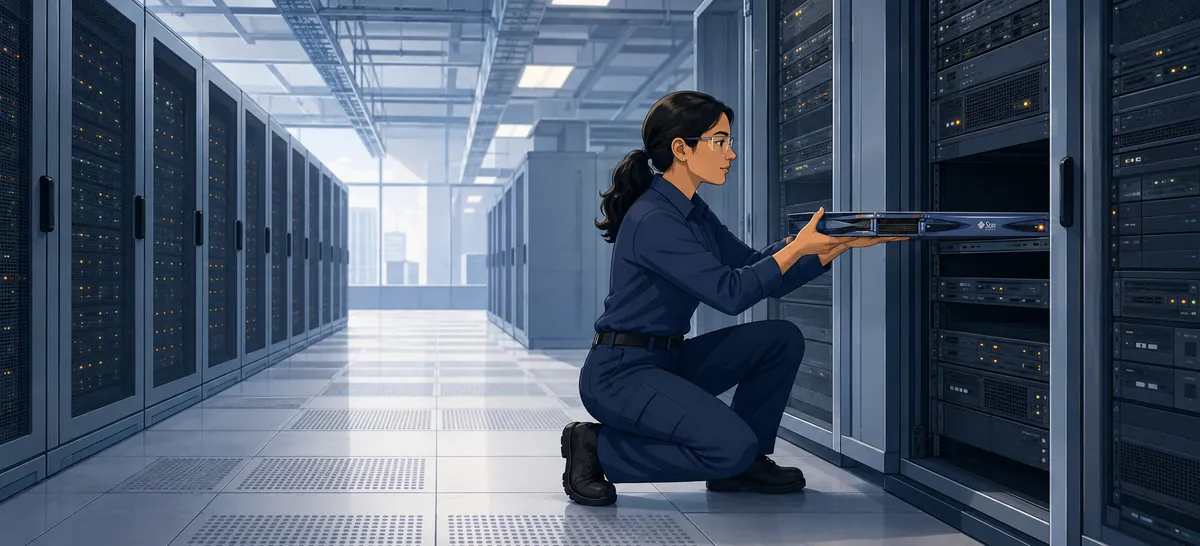
In the early 2000s, internet and telecommunications growth was driving demand for much more computing capacity. Adding standalone machines consumed scarce floor space, power and cabling, while multiplying the equipment that had to be configured and maintained.
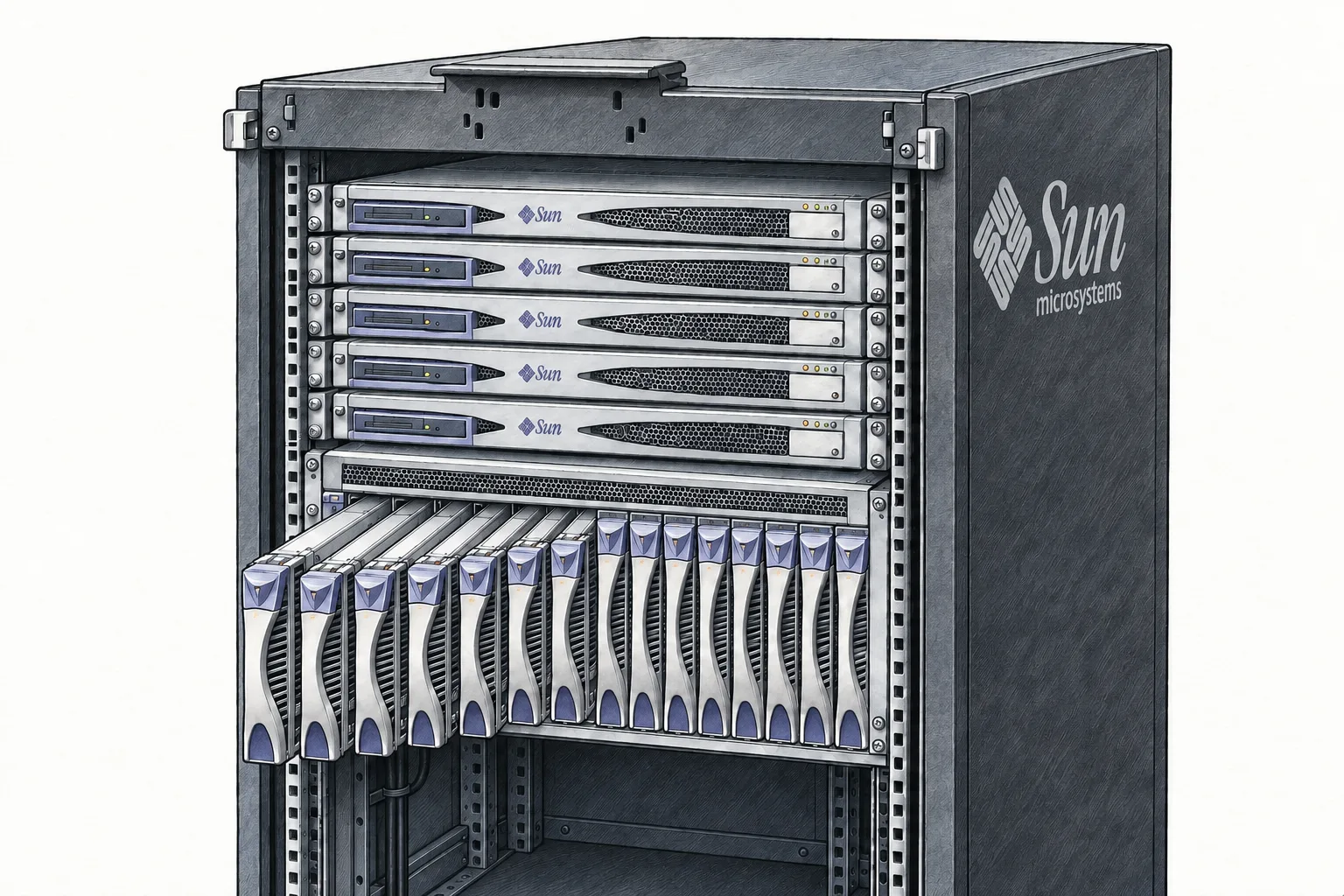
Sun was combining compact, replaceable servers into resilient infrastructure that could grow with demand and keep operating when parts failed. The Sun Fire B1600 supported up to 16 servers in a shared chassis with integrated power, networking and redundant management.
My responsibility covered the management software and interfaces for the 1U Sun Fire V210 and the denser 3U B1600. The challenge was to make these systems understandable and manageable from a distance, so administrators could diagnose faults and coordinate repairs without requiring a specialist engineer on site.
What I uncovered
Greater density could create greater operational complexity. Each system contained replaceable servers, network connections, power supplies and management controllers. One part could fail while the rest continued in a degraded state, and the administrator diagnosing it could be many miles from the technician replacing it.
Through customer visits, interviews and marketing input, I mapped the journey from remotely starting a server and diagnosing a fault to guiding an on-site technician through a repair. I traced each step to the hardware and software capabilities it required.
This connected the technical structure to the decisions people needed to make: what equipment was present, how it related, whether it was healthy and which action was safe. The model also had to remain useful as components were added, removed or temporarily unavailable.
Remote management was fundamental to reliability. Without remote console and power controls, a restart could require a trip to the data centre. Management also needed to remain available when the main operating system was not, and a repair had to identify the correct component without putting healthy equipment at risk.
The reframing
The work shifted from designing product-specific interfaces to defining a consistent management model. Reproducing every engineering control would leave administrators to interpret the system's complexity themselves.
The more useful starting point was a shared view of the whole system: its components, relationships, condition and safe actions. That model could guide both people operating the equipment and software managing it.
From
What technical functions should this interface expose?
To
What consistent view of the whole system lets an administrator act safely?
What I changed
Creating a shared system blueprint
Working with technical specialists, I translated the operational journey into a system blueprint linking each component to its relationships, condition, possible faults and safe actions. Detailed specifications gave hardware, software and interface teams a common reference for the system's identity and behaviour.
Making the model available to management software
I led the software team that designed and built an SNMP agent and new Management Information Base (MIB). The MIB described the equipment and its state in a structured form that management software could read, establishing a shared language for remote monitoring and control.
The interfaces reflected the same model, connecting what administrators could see to the actions they could safely take. This supported monitoring, diagnosis, configuration, remote restarts and coordination with on-site technicians.
Extending consistency beyond individual products
I also represented Sun in the DMTF's server-management standards work, contributing to common ways of describing and managing different hardware. This connected the product work to the wider move towards consistent management across mixed data-centre estates.
Caption
One system blueprint connected every component to its condition, faults and safe actions.
Outcomes
Delivered management capability
The Sun Fire V210 and B1600 shipped with capabilities that allowed administrators to monitor equipment, diagnose faults, change configurations, restart components and coordinate repairs remotely, even when the main operating system was unavailable.
What persisted
The SUN-PLATFORM-MIB, which I co-authored, continued into Oracle's Integrated Lights Out Manager after Oracle acquired Sun, allowing later management software to understand and monitor Sun hardware consistently.
The DMTF's SMASH command-line standard was later adopted as ISO/IEC 13187. It provided a common approach to server management beyond vendor-specific controls.
I was named as an inventor on eight granted US patents. They explored how hardware could identify and describe itself, how software could model, configure and monitor it, and how systems could recover from failure while keeping their management controls available.
The shipped capabilities, continuing management model and patent record show work that outlived the original products. Direct operational metrics are unavailable. The broader significance is the shift towards remote, software-managed infrastructure—an operating model on which modern data centres depend.
Applied skills
Systems architecture, software engineering, interaction design, user research, specification writing, standards participation and cross-disciplinary coordination
Team
Hardware and software engineers, UX specialists, product teams, technical authors, customers, suppliers and standards participants across the UK, Taiwan and the United States